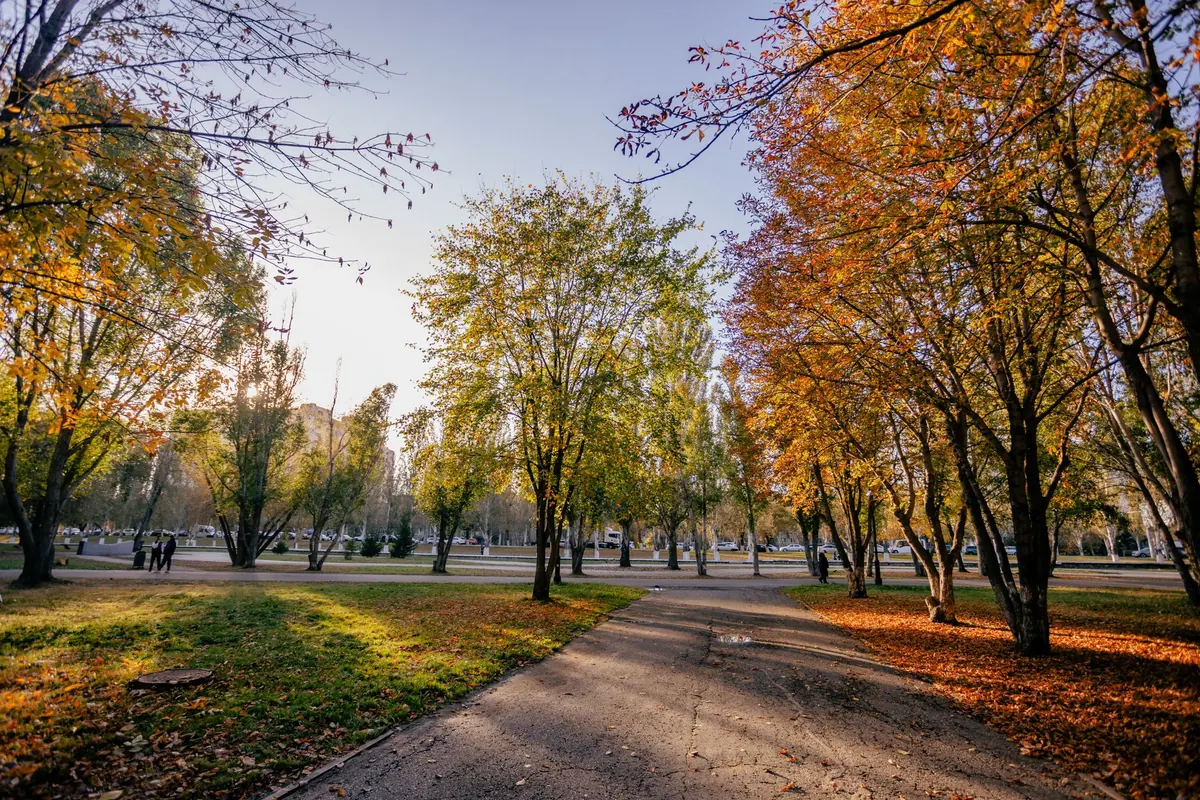
Norfolk does not do autumn the way the mountains do. There is no single week when the whole city turns gold and everyone drives west to look at it. Instead, the color arrives in pieces, a few weeks late and mostly along the water, and it lasts longer than most people expect.
That is good news. It means you can find good leaves on a lunch break, on a Saturday morning walk with the dog, or on a short drive after work. What follows is a practical map of where to go, roughly in order from shortest trip to longest, with notes on when each spot tends to peak.
Start on the Elizabeth River Trail
The easiest place to catch fall color in Norfolk is the paved trail that runs along the Elizabeth River and through the neighborhoods beside it. Park downtown near Town Point Park, walk past the Pagoda and Oriental Garden, and head west toward the Hague. Bald cypress, which lines much of the shoreline, turns a deep rusty orange in October while almost everything else is still green.
This is the stretch to hit early in the season. Riverfront trees are the first to lose leaves, because wind coming off the water strips them before the inland trees have even started. Go at sunrise if you can. The water is usually flat, the light comes in low from the east, and you will have long sections of the trail to yourself.
Keep going and the trail carries you through Freemason, past the Chrysler Museum, and into Ghent. It is flat, mostly shaded, and easy to break into pieces. A twenty-minute walk counts here.
Norfolk Botanical Garden
If you want one place with a wide range of trees and a guaranteed payoff, this is it. The garden sits on a large tract near the airport, and its mix of woodlands, water features, and open beds means the color changes by the week rather than all at once. Sweetgum goes purple-red. Dogwood goes a deep, almost wine-colored red. The oaks hold on last.
Two practical notes. First, check current hours and admission before you drive out; they shift with the season. Second, if the tram is running, ride it first to scout the grounds, then walk back to whatever looked best. The wooded paths near the water are usually the quietest corners, and they are where the reflection does most of the work.
Weekday mornings are dramatically calmer than weekends in late October. If you can only go on a Saturday, arrive at opening.
The Hague, Ghent, and the streets with the thickest canopy
Some of the best foliage in Norfolk is on residential streets, and nobody charges admission. The Hague, the inlet just west of downtown, is the anchor. Streets around Mowbray Arch and Stockley Gardens are lined with mature trees and old houses, and the water doubles the color on a still morning.
From there, wander into Ghent on streets like Colonial Avenue, then loop back toward the museum. You are not hiking. You are walking a neighborhood, which is the point.
A simple two-hour route
- Park near the Chrysler Museum or along Stockley Gardens.
- Walk the Hague loop, watching the water side for reflections.
- Head into Ghent for coffee and a few blocks of side streets.
- Return along the Elizabeth River Trail to your car.
Afternoon light works better than morning here, because the sun gets low behind the trees along the water and the whole street glows. The last two hours before sunset are the sweet spot.
Hermitage Museum and Gardens, plus Weyanoke
On the Lafayette River side of the city, the Hermitage Museum and Gardens combines a small art museum with wooded grounds that drop right down to the water. The tree canopy over the river is the draw in autumn, and the scale is manageable if you have an hour, not an afternoon. Check the museum's hours before you go, since the buildings and grounds do not always keep the same schedule.
Nearby, Weyanoke Bird and Wildlife Sanctuary is a small, densely wooded patch that feels far more remote than its address suggests. It is a good add-on rather than a destination on its own. Trails can be muddy and uneven, so wear shoes you do not mind getting dirty, and check a map before you set out, since the entrance is not obvious from the road.
Worth the short drive
If you have half a day, the color gets better as soon as you leave the city limits. All of these are close enough for a morning trip.
- First Landing State Park, Virginia Beach. About a half-hour from downtown. The cypress swamp near the main trailhead is the highlight, with boardwalks that put you right under the canopy. Go early; the parking lots fill on nice weekends.
- Great Dismal Swamp National Wildlife Refuge, Suffolk and Chesapeake. Flat, quiet, and strange in the best way. The dirt roads that double as wildlife drives are an easy way to see the swamp without hiking, and the cypress and maples along the water turn first.
- Northwest River Park, Chesapeake. A good choice if you want trails and water together, with paddling options when the weather cooperates.
- Back Bay National Wildlife Refuge, Virginia Beach. Farther out, but the marsh edges and maritime forest are worth the drive, especially combined with a stop on the way home.
Two reminders for any of these: bring insect repellent even in cool weather, and keep dogs leashed unless a specific area says otherwise.
Plan around the peak
Coastal Virginia runs later than the mountains. Color generally builds through October and peaks somewhere between mid-October and mid-November, with bald cypress and dogwood leading and oaks trailing. A single windy day or a hard rain can take a week off the season, so do not wait for a perfect forecast.
A few things that consistently help:
- Go midweek, or go early on a weekend. Light is better and crowds are thinner.
- Overcast days are underrated. Flat light makes close-up color look richer; bright sun is better for wide river views.
- Check city park and refuge pages the morning you leave. Hours, closures, and admission change with the season.
- Dress in layers and bring water. A 45-degree morning can turn into a 70-degree afternoon.
- Look down as well as up. Fallen leaves on a wet boardwalk or a brick sidewalk are half the photograph.
Norfolk's autumn rewards people who stay local and go often. Pick one spot this week, another next week, and you will see the season change in stages rather than missing it entirely.
Photo: Daniil Kondrashin / Pexels