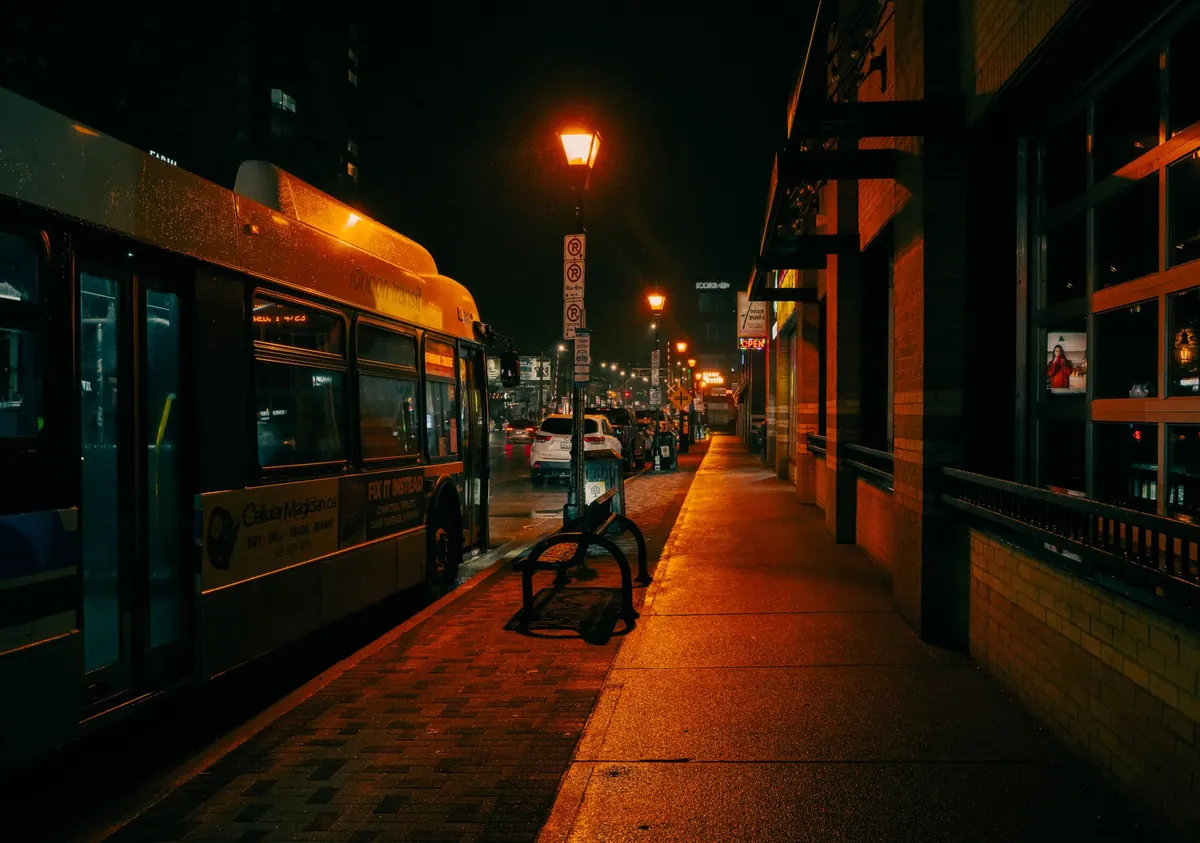
If your shift ends at eleven on a Saturday night, the bus that could take you home left an hour ago. That is not a minor inconvenience. It is a nightly tax on the people who keep Norfolk working after dark — the cooks, carers, cleaners and bar staff who clock out when the streets are quiet and the timetables have already given up.
Later weekend bus service is not a luxury, and it is not just a student issue. It is basic infrastructure, and for a lot of people it is the difference between a job they can accept and one they have to turn down.
The nine o'clock cliff
Ride any evening route on a Friday and you can feel the service thin out. Buses that came every fifteen minutes through the afternoon stretch to half-hourly, then hourly, then stop altogether. The final departures cluster around a time that suits someone leaving an office, not someone finishing a shift. Sundays are worse. In plenty of neighbourhoods the network folds up in the early evening and stays folded.
Miss that last bus and your options shrink fast: a long walk, an expensive taxi, or a favour from somebody with a car. None of those is dependable, and all of them cost more than a fare. The person who takes the taxi three nights a week is effectively paying a second rent for the privilege of having a job.
Who is actually waiting at the stop
When people picture public transport, they picture commuters heading downtown at eight in the morning. The late-night network serves a different crowd entirely:
- Hospital and care staff coming off evening shifts, often the least able to leave early or arrange a lift at short notice.
- Kitchen porters, waiters and bar staff whose work ends when the venue closes, not when the timetable does.
- Cleaners and security staff who start or finish in the small hours, in buildings nobody else is thinking about.
- Students holding down evening jobs in hospitality, often living in the neighbourhoods with the thinnest service.
- People visiting friends, family or a gig, who would happily leave the car at home if they could get back.
Many of them live in the parts of the city where buses are already least frequent. A twenty-five minute walk is pleasant in July and genuinely grim in February, especially after a nine-hour shift on your feet.
A safer way home matters
There is a safety argument here, and it is not abstract. Late at night, walking home often means badly lit stretches, unploughed pavements, roads with fast traffic and no crossing, and drivers who should not be behind the wheel. A bus is a lit, moving, supervised public space with a driver who knows the route. Every person who gets on it is a person not taking that walk.
That also applies to anyone who has had a drink. A bus that runs past midnight gives people a sensible option that does not involve judging their own sobriety, and it takes cars off the road at exactly the hour when they do the most damage.
What later buses would do for local business
Hospitality runs on transport. A restaurant cannot keep a full evening service going if half its staff have no way home, and a venue cannot sell tickets for a show that finishes after the last departure. When the buses stop early, the whole city's evening contracts to fit inside them.
Later weekend service would let kitchens stagger their finishes, let venues programme a second set, and let customers stay for one more course instead of leaving to catch a bus. That spending lands in local tills, in wages that get spent locally again, and in the tax base that pays for everything else. A city that closes at nine is not a quiet city. It is a city leaving money on the table.
What a workable pilot looks like
Nobody is asking for a full overnight network tomorrow. That would be expensive and it would fail. The sensible version is small, targeted and measured:
- Pick one corridor. Choose the route that serves the most late-shift employers — a hospital, a cluster of venues, a retail park — rather than spreading hours thinly across the whole map.
- Run hourly on Friday and Saturday nights until roughly one in the morning, with an early Sunday morning option for people finishing Saturday shifts.
- Line the last departures up with real closing times. Talk to venues, hospitals and employers about when their staff actually leave, then build the timetable around that.
- Make it easy to find. Printed timetables at stops, clear real-time information, and signage that plainly says a weekend night service exists. A bus nobody knows about carries nobody.
- Set a review date before you start. Count riders, note where they board, and decide after a set period whether to extend, adjust or stop.
- Bring partners in. Hospitals, large venues and big employers all benefit. Asking them to help fund and promote a pilot is reasonable, and it spreads the risk.
Keep the first phase small and the review honest
A pilot that tries to serve everywhere at once will produce light buses and a quick political burying. A pilot on one corridor, running for a defined period with a clear way to measure it, gives everyone something to argue about with evidence instead of hunches.
Answering the fair objections
Cost is the real one, and it should not be waved away. Running buses late costs money, and drivers have working-time limits like everyone else. But the comparison is not between spending and not spending. The current arrangement already costs a great deal — in taxi fares paid by people earning modest wages, in shifts declined, in staff who leave for somewhere with better links, and in the emergency services picking up the pieces of a night with no way home.
The other objection is that the buses will be empty. Early on, some will be. That is normal for a new service, and it is why the pilot should run long enough for word to spread and for employers to adjust rotas around it. Judging a night bus in week two is like judging a new shop before the sign is up.
How to move this forward
If you want later weekend buses, be specific. Vague pleas for better transport get filed. A question like "what would it cost to run hourly service on this corridor until 1am on Fridays and Saturdays, and what ridership would justify keeping it?" gets an answer.
Go to the next transport or council meeting and ask it in public. Write to your elected members, and copy in local employers who depend on late staff. Ask your workplace to say publicly that it needs the service. Talk to neighbouring businesses and make the request together — a single voice is a complaint; a dozen is a constituency.
None of this is glamorous work. It is timetables, funding lines and committee agendas. But the city already runs a decent daytime network. Extending it a few hours on the two nights when most people go out is a modest ask with an outsized return: more people in work, safer streets, and an evening economy that is not cut short by a last bus nobody could catch.
Photo: ShaaHeel Singh / Pexels